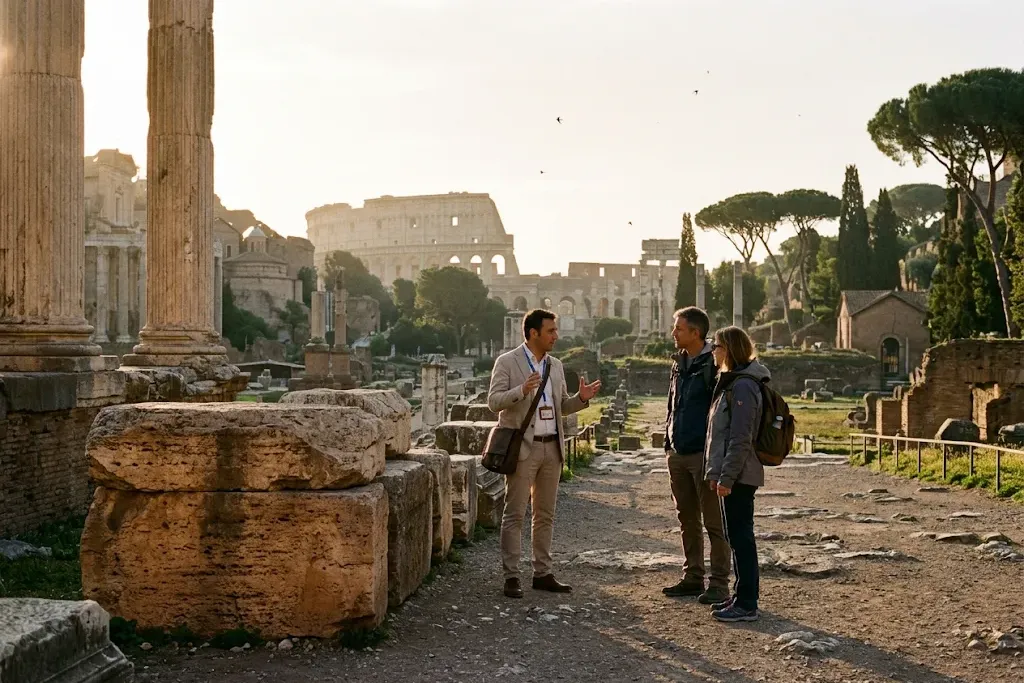
Three of Rome's most famous sights now charge or need a timed booking. Since 2 February 2026, reaching the basin of the Trevi Fountain costs €2. The Pantheon has charged €5 since July 2023. The Colosseum is entered on an €18 timed ticket that also covers the Roman Forum and Palatine Hill. Here's how each works and what to book ahead.
The Trevi Fountain: €2 for the basin
Rome introduced a €2 ticket to step down to the basin, the area right by the water, from 2 February 2026. It applies every day from 9 am to 10 pm. The square above stays free, so you can still see the fountain without a ticket; you only pay to go down to the edge.
- Free for: residents of Rome and its metropolitan area (with ID), children under 5, and people with disabilities and their companions.
- Where to buy: on the official site, fontanaditrevi.roma.it, at Rome's civic museums and tourist info points, or at the entrance (card only).
- Tip: outside 9 am to 10 pm there's no charge. Early morning is also when the fountain is calmest.
The city says the fee pays for the fountain's upkeep and helps manage the crowds, which can reach tens of thousands a day.
The Pantheon: €5
The Pantheon, nearly 1,900 years old and still the world's largest unreinforced concrete dome, began charging €5 in July 2023. It remains a working church, so mass times are free to attend but not for sightseeing. Tickets can be bought on the day, though booking online skips the queue in summer.
The Colosseum, Forum and Palatine: €18 timed ticket
The standard ticket costs about €18 (including the online booking fee) and covers the Colosseum, Roman Forum and Palatine Hill over 24 hours. You enter the Colosseum at the time on your ticket.
- Full Experience (about €24): adds areas with limited access, such as the underground (hypogeum) and the arena floor, or the upper tiers. These sell out first.
- Under 18s enter free but still need a booking; EU citizens aged 18 to 24 pay a reduced €2 rate.
- When to book: tickets are released on the official site, ticketing.colosseo.it, about 30 days ahead, and peak dates (April to October) go quickly. Book directly to avoid resellers' markups.
- Bring ID. Tickets carry the visitor's name, and staff can check it.
What else to book ahead
- Vatican Museums and the Sistine Chapel: book on the official Vatican Museums site. The museums close on Sundays except the last Sunday of the month, when entry is free and very crowded.
- Borghese Gallery: entry is by timed reservation only, in two-hour slots, and often sells out days or weeks ahead.
- St Peter's Basilica: free, with a security queue; the dome climb is paid.
What a local guide adds
In Italy, tourist guiding is a licensed profession, and a licensed guide can show their card if you ask. In Rome a guide makes the biggest difference at the sites with the least signage and the most history:
- The Forum and Palatine, which can look like a field of stones without someone to rebuild them for you.
- Timing and routes: which entrance has the shortest queue, and in what order to see things so you're not doubling back in the heat.
- Neighbourhoods: Trastevere, Monti and the Jewish Ghetto are best explored with someone who lives there, especially for food.
When to go
April to June and September to October are the most pleasant months, and also the busiest. July and August are hot (often above 30°C) and many Romans leave in mid-August. November to February is quieter and cheaper, with short days and some rain.
The short version
- Trevi Fountain basin: €2, 9 am to 10 pm; the square is free.
- Pantheon: €5.
- Colosseum, Forum and Palatine: about €18 on a timed ticket, released about 30 days ahead; book on the official site.
- Book the Vatican Museums and the Borghese Gallery ahead too.